by Scott Sadil
O’Keefe calls them Yuck Bugs.
And, come to think of it, maybe it is inappropriate (or should be) to refer to these ghastly creatures by their old-fashioned name — an insult, somehow, to members of the faith.
Or, perhaps – and it wouldn’t be the first time – I’m feeling overly cautious, especially after receiving a note with my most recent purchase of USGS topo maps, in preparation for a recent trout hunt, labeled Derogatory Names Advisory, the note itself explaining that my map or “product may contain geographic feature names declared derogatory through U.S Department of Interior Secretarial Orders 3404 & 3405.”

You can’t be too careful.
Nevertheless, if you look online, or you’ve glanced at the news of late, you may well have heard or seen mention of Mormon crickets, probably in reference to migratory infestations of biblical proportions.
Or, if you’ve been out driving, especially in and about Great Basin trout country, you might have run over them, literally, by the thousands.
Gross is the only adequate word. The sludge of squashed bugs can be deep and slick enough to cause accidents, with cars and trucks sliding off the greasy pavement. The first time I encountered Mormon crickets, while riding with Joe Kelly into Nevada, I thought a truck up ahead must have spilled a load of manure or topsoil or barkdust — some such freight that ended up smeared across the road.
Then we noticed the surface of the road moving, as if a gust of wind was stirring ashes of a recent wildfire.
Joe, a biologist, pulled his pickup to the side of the road. He climbed out to have a look. One glance out my window, I refused to get out of the cab.
In our context here, of course, the only important question is whether Mormon crickets are eaten by trout. Trout, we know, love bugs. So do fly anglers. More bugs, bigger and healthier fish. But isn’t it possible to have too much of a good thing?
To answer the first question, whether trout eat Mormon crickets, we need look only as far as a paper published in the Great Basin Naturalist, “Migrating Mormon Crickets, Anabrus simplex, as food for stream fishes,” authored in the late 1980s by Harold M. Tyus and W.L. Minckley, fish biologists of some renown, who sampled the diet of fish on the Yampa and Green rivers in Dinosaur National Monument, near the border between Utah and Colorado, during the sort of Mormon cricket migrations happening right now.
The findings were conclusive. “When Mormon crickets were present,” wrote the authors, “all fish species large enough to eat them had done so. . . . Remarkable numbers were present in some digestive tracts, distending stomachs and intestines and, in some cases, filling buccal cavities and protruding from mouths.”
Better still, continue the authors, at the confluence of the Green and a small tributary, “19 of 21 brown trout, 1 out of 3 rainbow trout, and 1 cutthroat taken immediately below the inflow were gorged with crickets (italics mine for emphasis).
Sounds like a good reason to fish a rubber-legged Fat Albert, size 2.
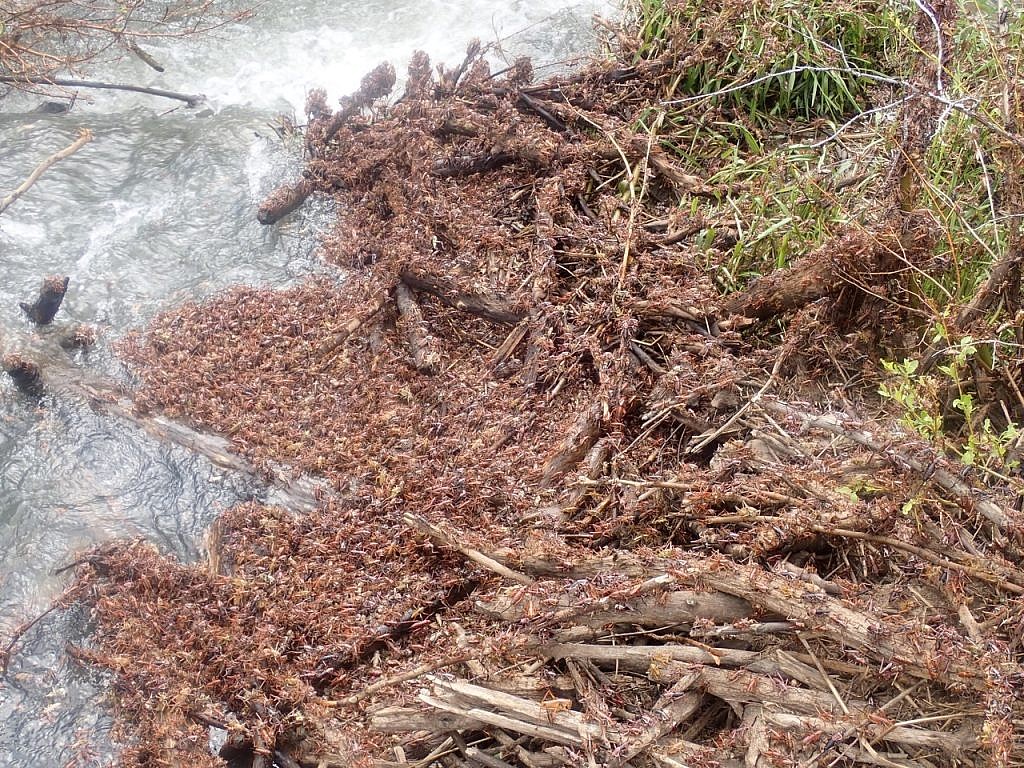
As to the question of whether you can end up with too much of a good thing, I’ll let the pictures speak for themselves.
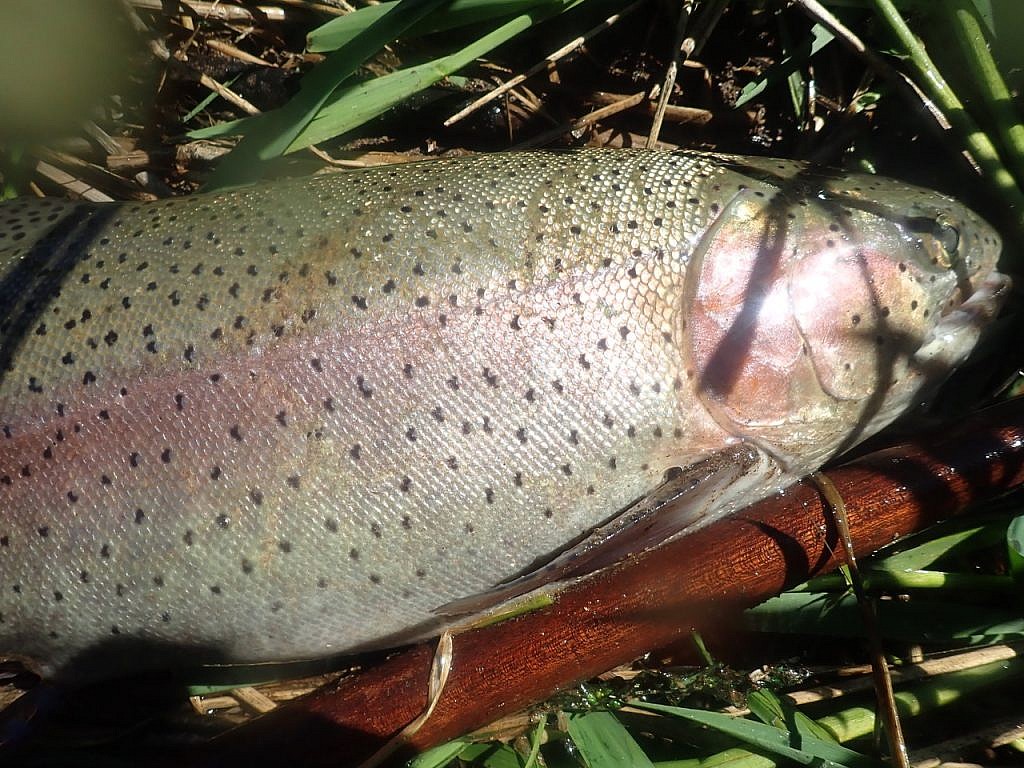
There’s a reason, I guess, O’Keefe doesn’t like them.
Gray’s angling editor Scott Sadil gladly tolerates any animals fish will eat. Except mosquitoes.