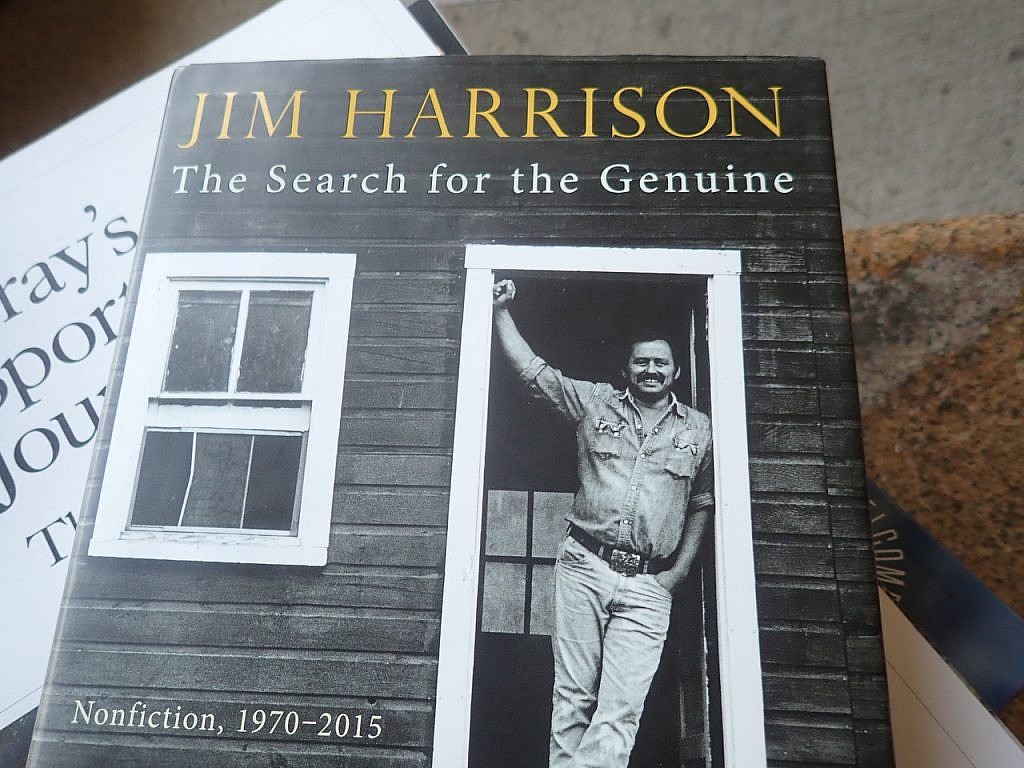
Thirty years ago Harrison proposed sending to each member of Congress copies of four books: Aldo Leopold’s Sand County Almanac, Edward Abbey’s Desert Solitaire, Gary Snyder’s Practice of the Wild, Peter Matthiessen’s Wildlife in America. “If all the members of Congress actually read these four books,” writes Harrison, “the entire environmental movement could dissolve because it would no longer be needed. For the first time since we entered World War II Congress would glow with high intent and clear purpose. The restorative powers of knowledge in these books would be so instantaneous that workers could immediately begin removing the hog troughs from the House and Senate.”
Who today in Congress do you suppose has read all four of these books? Of course, there are no exams to pass in order to become a politician. Curious about my own retention, I picked up a copy of Matthiessen’s sobering text, published in 1959, “a history,” writes Harrison, “of what we have done with our fauna since we got off a succession of rickety craft in the seventeenth century.” The thesis? “We trashed a virtual paradise.”
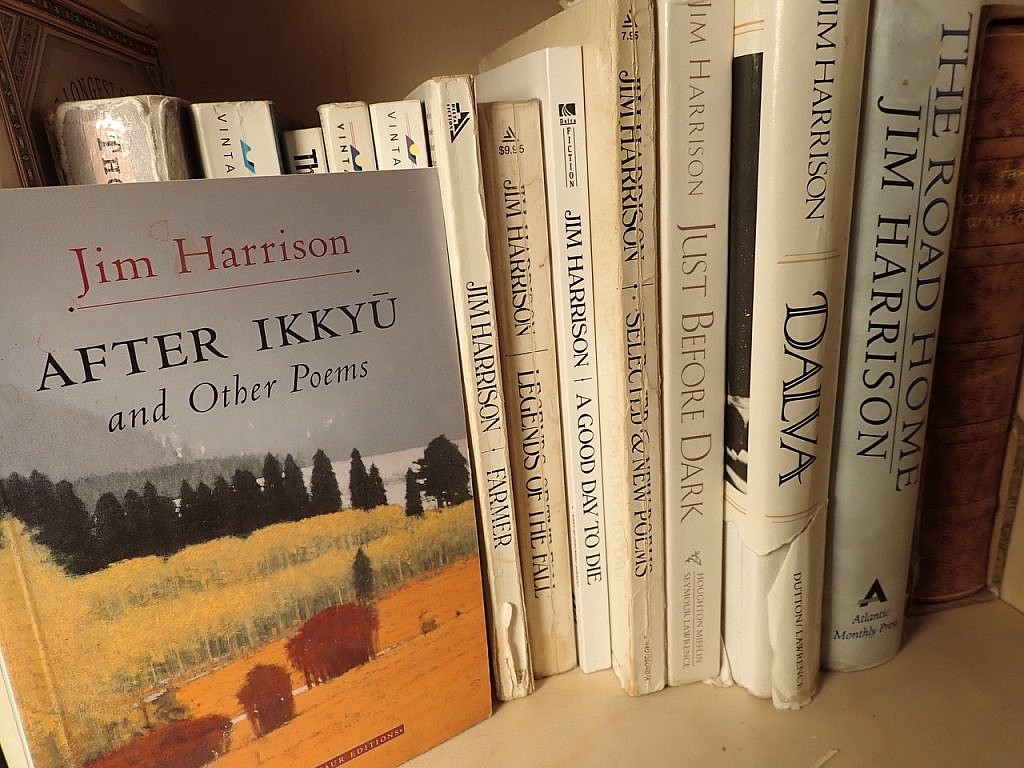
Perhaps the more important question, for Harrison, is that given this thesis “what is the process of redemption?” Harrison’s life, I’d suggest, might offer us some clues.
On the back of his early books, if I remember correctly, he was described as a “man of letters.” Still, he was only a writer. Which means, in the end, he had no time for politics, for proselytizing, for protests and crowd-funding and marketing his own brand. He wrote poems. He wrote stories. His life out of doors, it seems to me, was a way to recover from the hard work of writing, of mining his imagination, and a way to get ready for more of the same.
Gray’s angling editor, Scott Sadil, quit his day job when the loss of three voices of his generation – Jim Harrison, Peter Matthiessen, and Muhammad Ali – suggested that he might soon find himself, too, at the head of the line.