by Scott Sadil
It’s official.
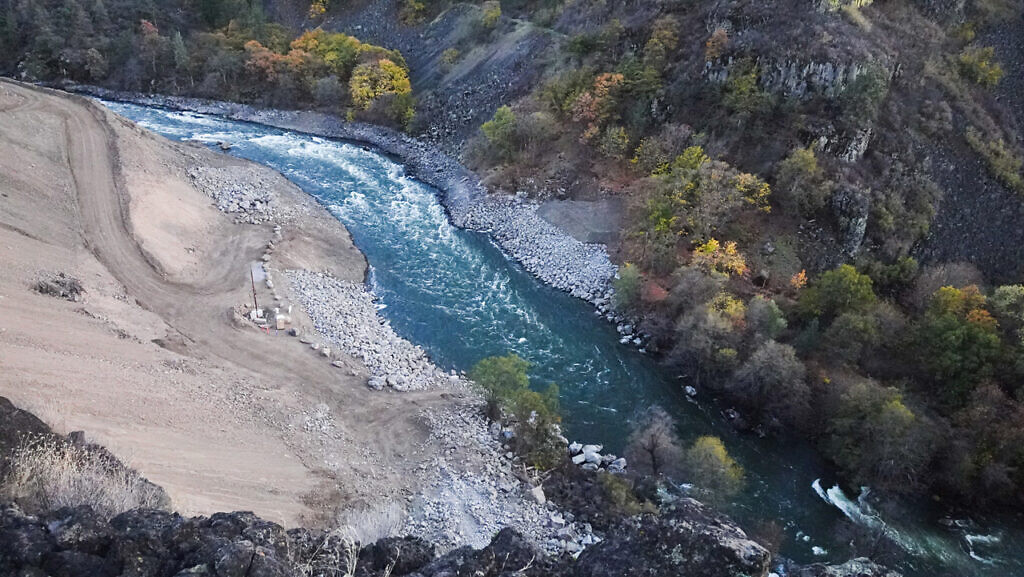
Early this month, the Klamath River Renewal Corporation announced that Kiewit, the contractor hired to undertake the daunting task of pulling four dams out of the Klamath River, freeing up hundreds of miles of salmonid habitat, had completed its work.
For the first time in more than a hundred years, salmon, steelhead, and trout are free to swim throughout the Klamath River basin – or at least that part of it below the remaining Keno and Link River dams and Upper Klamath Lake, which will maintain an all but toxic barrier between the mainstem Klamath and the prime spawning and rearing habitat once supplied by its famous spring-creek tributaries, the Sprague, the Sycan, the Williamson, and the Wood.
But I guess I shouldn’t get greedy.
A remarkable watershed that passes from the edge of the Great Basin, through the Cascade divide and Klamath mountains before reaching the Pacific, the Klamath basin, in its entirety, once produced numbers of West Coast salmonids shy only of totals found in the Columbia and Sacramento river basins. To folks who fished the river for millenia, of course, the Klamath runs were second to none, both their spiritual and cultural lifeblood.
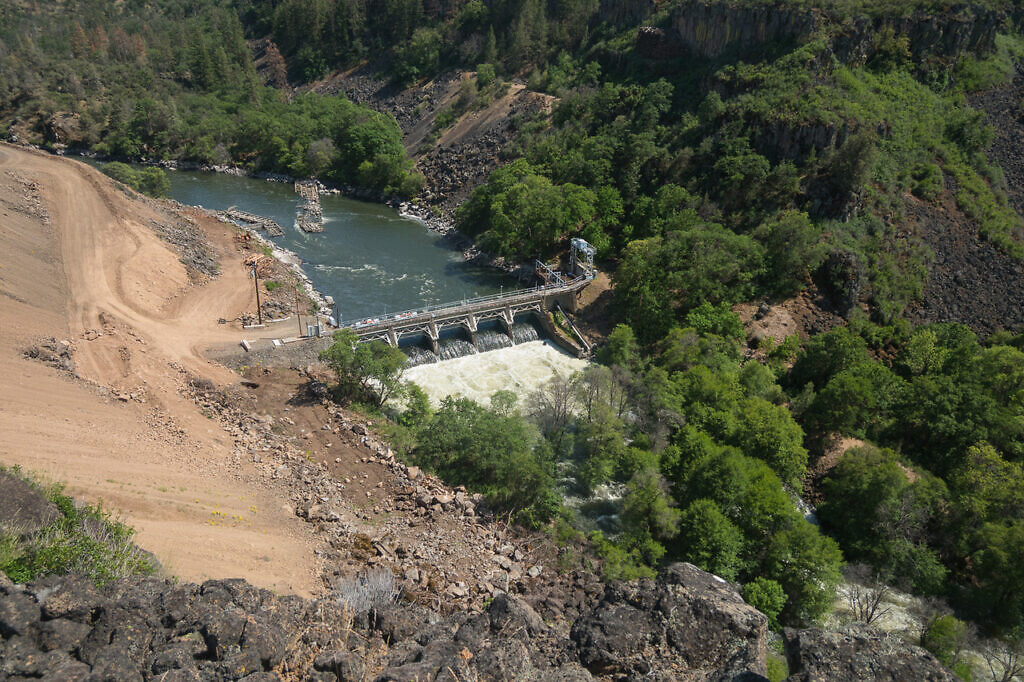
Dubbed the largest dam removal project in American history, or the history of the world, depending on your source, the work on the Klamath mainstem continues a decades-long trend: For the first time in our country’s history, outdated dams, dams that no longer serve any viable purpose, are being breached and dismantled for the sake of environmental restoration, a return to quantitative river health and the ecological coherence that evolved within these native ecosystems.
Two books worth reading for anyone interested in this trend: Elizabeth Grossman’s Watershed: The Undamming of America and Steven Hawley’s Cracked: The Future of Dams in a Hot, Chaotic World. Not everyone supports this movement. And because a river, for the sake of anadromous fish, is only as good as the health of the sea into which it flows – or the quality of the air, no doubt, above – there’s absolutely no guarantee that a free-flowing Klamath will bring about the restoration of damaged stocks of salmonids.
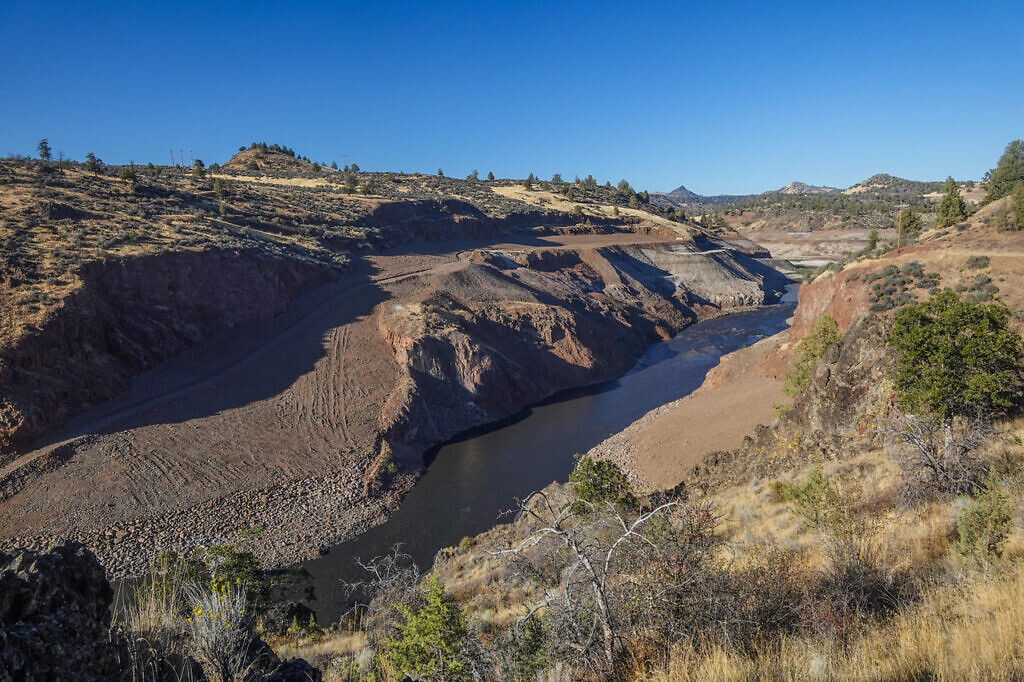
What we can be sure of is that any restoration won’t happen overnight. For one, in spite of efforts on the part of Kiewit, millions of cubic yards of sediment will still have to flush out of the system, a shocking discharge in the process of any dam removal. Folks in my neck of the woods screamed their “I-told-you-so!” disapproval when Condit Dam, on the nearby White Salmon River, was obliterated, sending a brown slurry roaring into the Columbia. Today, however, the White Salmon runs clear as October skies, and salmon anglers who know how to negotiate the sandbar below the bridge at the mouth of the river find plentiful fish at the edge of the ever-shifting shallows.
And the science of dam removal keeps improving. Along with efforts to deal with sediments built up behind dams, restoration work now entails long-term contracts to restore native flora to formerly submerged acreage. Rather than spraying the bare soil with a random mix of seeds, as if planting along a freeway or the hillsides in tract housing, or allowing weedy exotics to take hold, crews are now working to cultivate vegetation specific to the wide variety of riparian habitats and elevation changes along the river, with close attention to the aspect of any slope, whether it faces north, south, or somewhere in between.
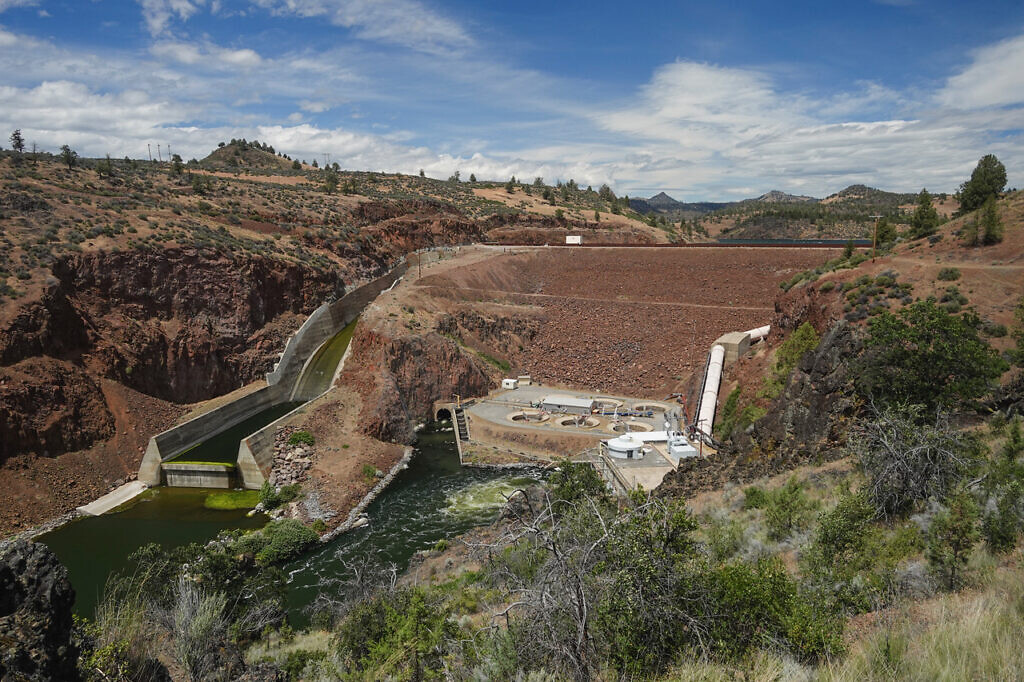
Details, details. It’s a big job to clean up after a big mess. The good news, of course, is that rivers, if allowed to run free, do a pretty good job on their own of ridding themselves of old waste and unwanted debris. We’ve seen it now for decades. It’s probably asking too much to expect runs of salmonids to return to historic levels, but even a change in direction, an increase rather than a decline, can feel like a win. Meanwhile, news of the successful eradication of these four Klamath River dams has no doubt captured the attention of observers farther north, where the Snake River, and its own runs of salmonids, have long been crippled by another quartet of questionable dams.
Gray’s Angling Editor Scott Sadil feels a close affinity with any fish that spends part of its life in a river and part of it in the sea.