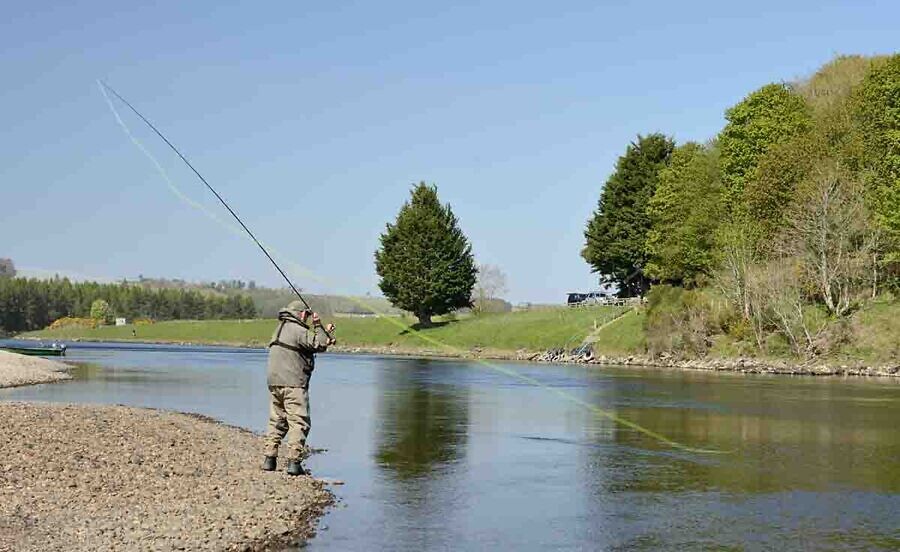
ON THE DRIVE, I WAS PLEASED TO FIND THE CATSKILLS not unlike the Ozarks of my childhood. Both are dissected plateaus cleft into sharp relief by rivers. I resisted the urge to stop and survey every stretch of moving water I drove across, and headed straight for my destination.
Hiding my nerves behind feigned eagerness, I stopped at the first river access I saw and rigged my rod with old standards, a Stimulator and a trailing Prince Nymph. It seemed a good sign that a local was already there and packing up. I tried to probe for information on secret stretches or local fly patterns, but I gathered through his heavily Russian-accented English only that he had giddily and permanently retired from a job with the City and that his son’s hobby was building beautiful handmade fly rods. Both details made me glad I’d stopped, but it was otherwise an unproductive chat.
By the time I had yanked out enough line for a cast, over the objections of my reel’s drag, the water went from cold to wet, and I could feel the crunch of river gravel. The sole of my dry-rotted boot was floating downstream, and my waders were leaking at the seams. I drove back to town, hoping to catch a fly shop still open.
“You’re a little late as far as the season goes, and the rains from Hurricane Irene blasted the bugs and fish. But at least you’ll have the river mostly to yourself.”
The guide running the shop was eager to offer an opinion on nearly everything except the best value on wading boots. Instead he ran through his talking points, occasionally referencing the din of cable news coming from a wall-mounted TV. His convictions were strident, though whether to the left or the right is still unclear. When we got to subject of wading boots and flies, his insights were autobiographical. “I go through several pairs a year, no matter what brand.” This detail provoked the envy in me he’d intended, and I simply chose the cheapest pair. I finally extracted a fly pattern from him, though: a yellow stonefly, not the black version I fished in the West.
At the fly case, he tossed flies onto the transparent cover and shrugged, leaving the impression that he could catch the wiliest trout on a piece of pocket lint. I chose three in different sizes and went to the register. Sensing my center of gravity leaning toward the exit, he took a final shot: “You’re a little late as far as the season goes, and the rains from Hurricane Irene blasted the bugs and fish. But at least you’ll have the river mostly to yourself.”
I replied with defiant optimism and faulty logic: “Well, if there are any fish left, my fly’ll be even more appealing.” I left with the feeling that I’d been briefly cast in a summer production, and he was glad to draw the final curtain.
Too late to fish, I browsed a liquor store and found it to be just that. Summer-only trout towns, like this one and others in the West, tend to be hard-drinking in the winters. The liquor store’s block-and-board shelves were sparsely stocked, the bottles spaced to mask the meager inventory but not hide the dust. There was no wine on the shelves that bore a hue indicating its past as a grape, so I decided to take my chances at the grocery store and quietly slipped out, muffling the dangling bell salvaged from a Christmas tree. The bell’s flat tink didn’t interrupt the two attendants’ impassioned conversation.
I headed back to the motel with some consolation beer from the supermarket.
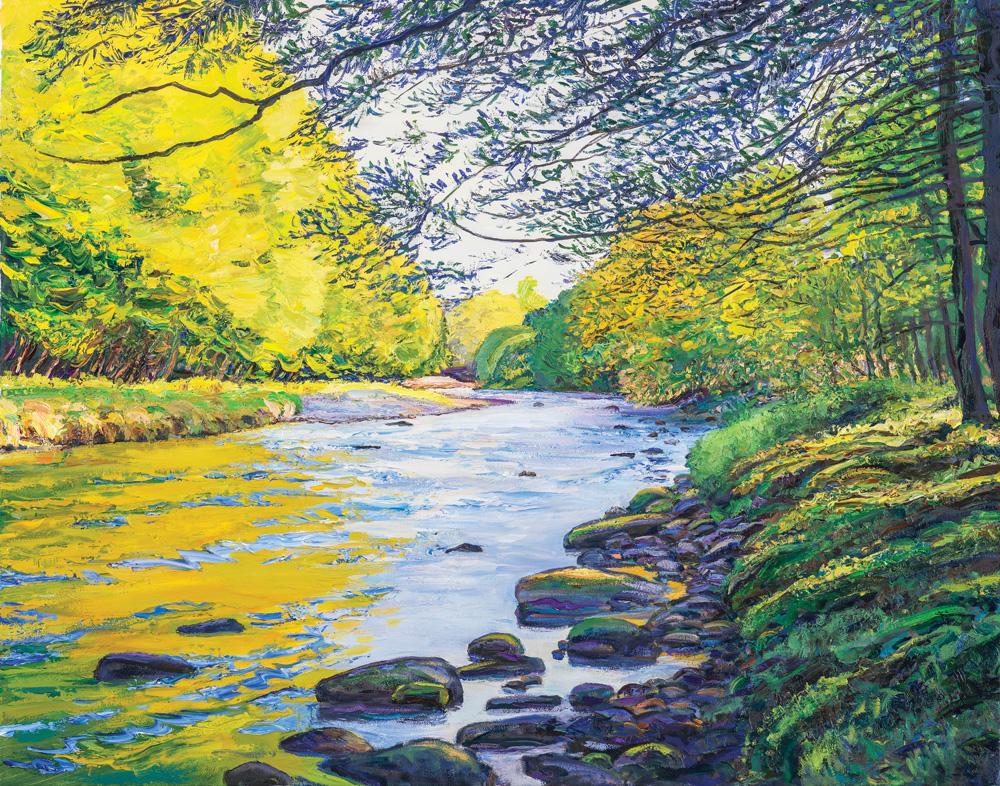
A LITTLE FOGGY, BUT UP EARLY, I mustered enough enthusiasm to get on the river by seven o’clock. The rubbery newness of my waders wafted up as I dressed and rigged. The light drizzle affirmed my plan to fish the stonefly nymph, along with a new type of strike indicator—there’s always a new type of strike indicator. This one resembled that 1980s doodad called the Koosh ball, and it kinked my leader almost as much as another essential technological advance: the tungsten weights crimped above my fly.
I started off fishing slow, flat water that I didn’t think would be much of a challenge. The broad, placid stretch below a bridge shielded me from the spitting rain but lacked any signs of feeding trout. An hour or so later, with still no sign of trout, the drizzle turned torrential.
I retreated to the bridge and pursued plan B. The guidebook’s map showed a small feeder creek said to hold brook trout, the eager freshman of the species, and I thought I might at least break my losing streak.
Spotting a culvert emptying clear water into the main river, I guessed it to be the tributary. I tied on a size 18 Adams on which I’d caught (and missed) dozens of brook trout, each time astonished at how quickly they struck. The densely forested banks didn’t provide the rain cover I’d hoped, but they exceeded my expectations for obstacles. I lost two flies inside 15 minutes, and was fuming over a knot I couldn’t have created on purpose when I decided to return to the bridge and rerig.
“When the fluorescent indicator dunked under, my heels tingled, and the fish righted itself and charged down toward the tailout, my line slicing a jagged seam in the water’s surface as I waded in pursuit.”
Fishless, soaked through, nearing disillusionment, I couldn’t help but think that heeding bad advice was part of the reason I was here. I resisted sulking and wishing I were on a familiar river in the West, knowing one fish could salvage this trip.
I kept the yellow stonefly pattern, but removed the weights and trailing fly and replaced the new indicator with a decade-old variation that was both more buoyant and more visible in the fast, narrow run. I waded into the dragging flow and worked my way waist-deep up the run. With my line unencumbered, I made long, stiff casts, tossing mends in the bowing belly of line and stripping any slack.
When the fluorescent indicator dunked under, my heels tingled, and the fish righted itself and charged down toward the tailout, my line slicing a jagged seam in the water’s surface as I waded in pursuit.
The trout tired, and I brought it to the bank, a 12-inch brown. It breathed and gulped as I removed the hook, but did not flop or struggle in the sand, knowing it was beat. I revived and released the fish. It paused, as timid as I had been the day before, disbelieving that it was free and returned to the river.
Ben Haguewood lives in Austin, Texas.