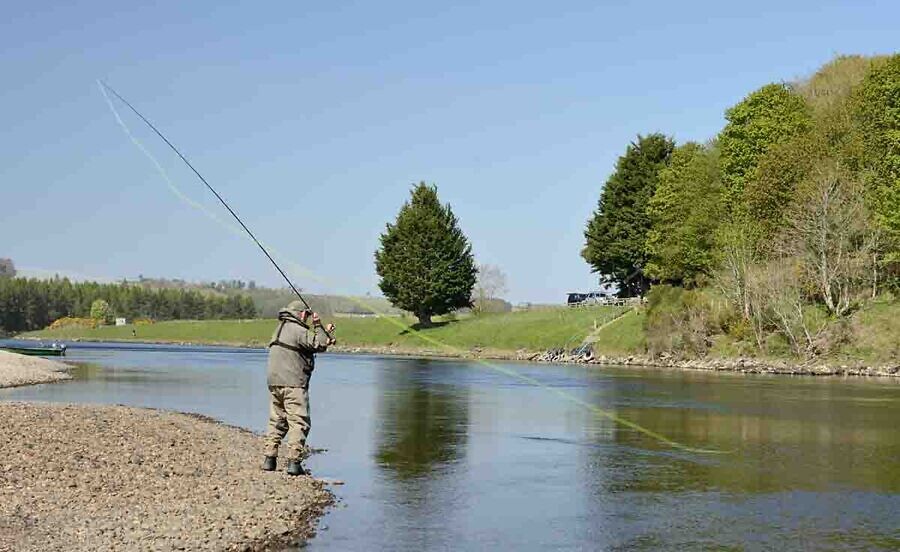
Green. Who needs it?
by Terry Wieland
Finally. Finally!
Summer’s gone, with its choking humidity and waves of heat and those highly overrated green leaves. To quote Aunt Constance from Gosford Park: “Difficult color, green.”
Along about mid-September, the trees that line all the Ozark Mountain roads hereabouts start giving off a definite vibe that, well, they are simply tired of being green. Like a beautiful girl getting off work and eager to change into something more colorful, the trees want to don some flamboyant finery and have one last good time before they wander off to bed for the winter.
That, at least, is the way I like to interpret it. I’m not sure which day marked the official end of summer — 20th? 21st? — but yesterday we shot trap in what felt like fall. It was sunny, then it wasn’t, then a gust of rain blew in, then it was sunny again, this time with a definite chill breeze to cause the clay pigeons to do their diving and dancing routine. So I missed a lot. So what? There was no sweat rolling into my eyes and the scent of gunpowder was divine.
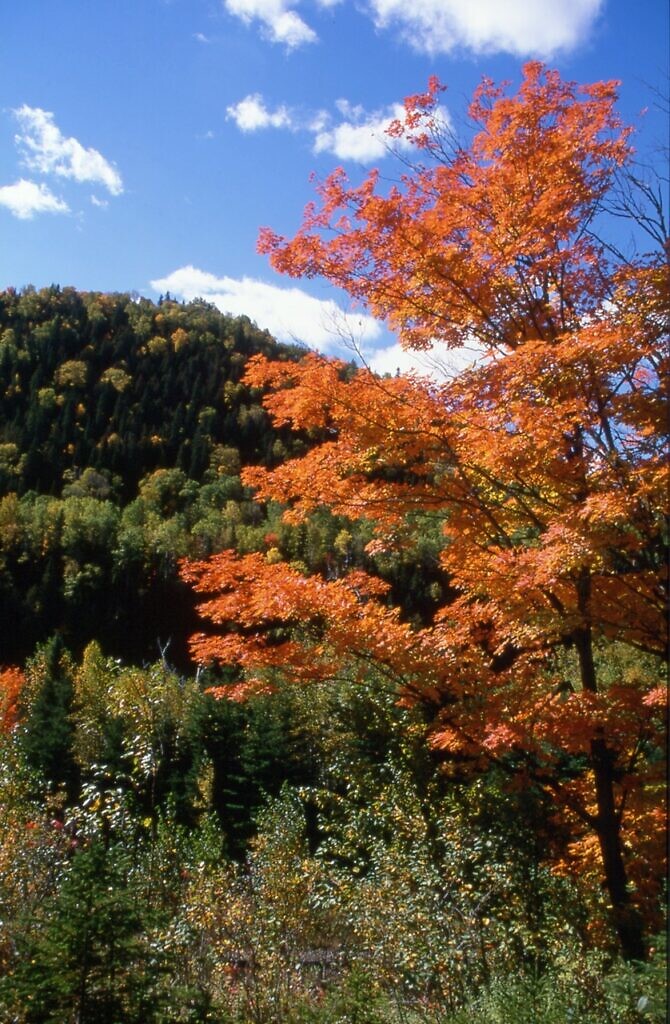
This is not to say summer’s gone for good. We could get one last visitation from the god of heat and humidity, whichever malevolent deity that might be, but from here to January it looks like a lot more good than bad.
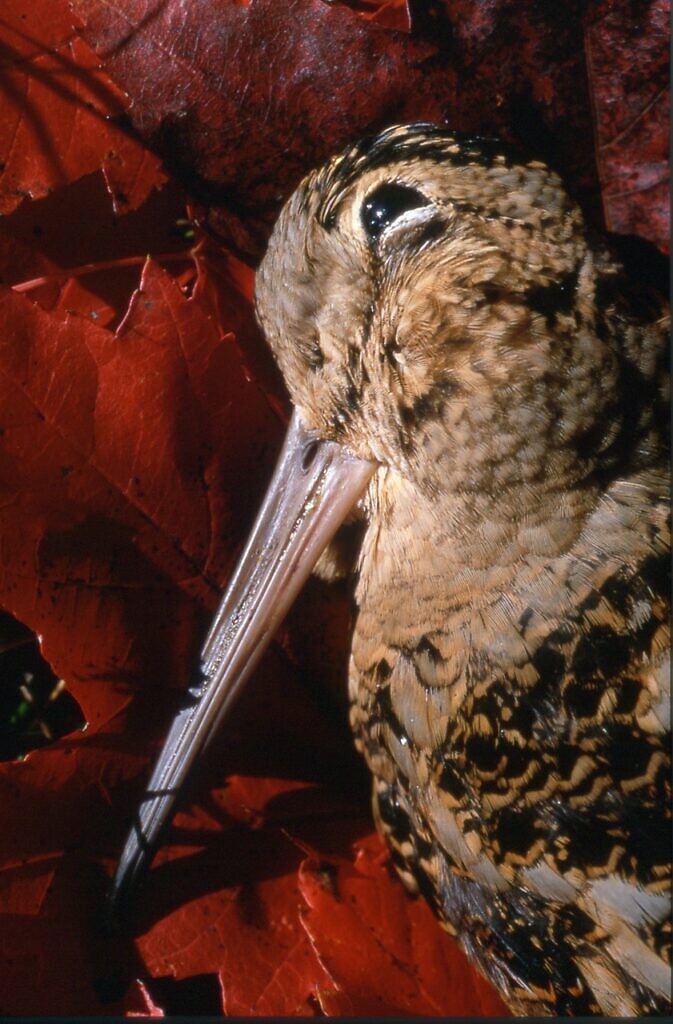
Today, September 25, is the traditional opening day for grouse and ducks in Ontario, where I grew up, and in my teens that date was more important than Christmas. Another tradition with writers of my ilk is to write some sort of paean to Opening Day — some joyous, some agedly melancholic and nostalgic, some recalling the thrill of being a bloodthirsty 12-year old savage, setting forth with Dad’s single-shot 12 gauge.
Robert Ruark’s piece about the death of the Old Man, sad without being smarmy, was titled “But Not on Opening Day.” That was his grandfather’s promise: He was going to die (cancer) but he would make sure it was not on that most important day in a hunter’s calendar. Little Bobby was duly grateful, as we all would be.
Ernest Hemingway, that most perceptive of writers, I think locked up autumn in literary terms with one of his Nick Adams stories, “The Three-Day Blow.” It’s one of those Hemingway pieces where not much happens, and you can’t quite put your finger on it, but it’s set in the fall, on the shores of Lake Superior, after a rain, with the wind coming in hard. Nick’s wearing a mackinaw and he picks up a Wagner apple from the side of the road, glistening from the rain, and puts it in his pocket. Off in the distance, carried on the wind, the sound of a shotgun.
In Canada, there are two places to be in the fall when the storms come and the geese fly south. One is high on a hill overlooking Lake Superior. You want to feel small and insignificant? Rain or shine, that’ll do it. You want to just be glad to be alive? A sun-chilled October day on the south shore of the St. Lawrence, in Quebec in a 400-year old village with a stone oven and a boulanger who knows how to brew espresso and bake croissants. You may never leave. Or at least, you won’t want to.
I’m told, although I’ve never seen it, that Cape Breton Island, the northernmost tip of Nova Scotia, is another. And I can attest that, on the right day, in the right weather, Newfoundland will do it, too. The thing is, ya gotta be in the north; ya gotta have that biting chill; and only a mackinaw will do.
As with many other things, New Yorkers not only lay claim to fall, they seem to think they invented it, and that it can only be truly experienced strolling down Fifth Avenue wearing three-piece tweeds. As evidence, I offer you “September Song,” (Kurt Weill, 1938), “Autumn in New York,” (Vernon Duke, 1934) and, best of all, ( “Autumn Leaves)” by Joseph Kosma and Johnny Mercer, written in 1945 and taken from a French song called, slightly more gloomily, “Les Feuilles Mortes,” or “the dead leaves.”
That’s the thing with fall: Always, in the background, lurking like a black wolf, is death.
Gordon Lightfoot, who grew up in Orillia, in the lake country north of Toronto, composed an entire oeuvre for listening in the fall. Even in his songs that don’t mention it, you know it’s there. The obvious great is, of course, “The Wreck of the Edmund Fitzgerald.” Find me a better song for fall and I’ll buy you a beer.
A much earlier Lightfoot contains the line “The dead leaves of autumn, that cling so desperately, must fly before the cold October wind.”
Well, as must we all.
That line, by the way, is from “Peaceful Waters,” a song on his first album, Lightfoot! (1966).
Finally, there’s Justin Hayward (The Moody Blues) with “Forever Autumn,” a song from Jeff Wayne’s The War of the Worlds. It’s a production that, to the best of my knowledge, no one ever liked but me. Even those who like the song appear not to know its origins. It manages to achieve happiness and sadness simultaneously which, when you think about it, pretty much defines autumn.
As for the green leaves of summer, goodbye and good riddance. Difficult color, green.
Gray’s shooting editor knows it’s really truly irrevocably fall when he puts on a flannel shirt to venture outside. Any day now.