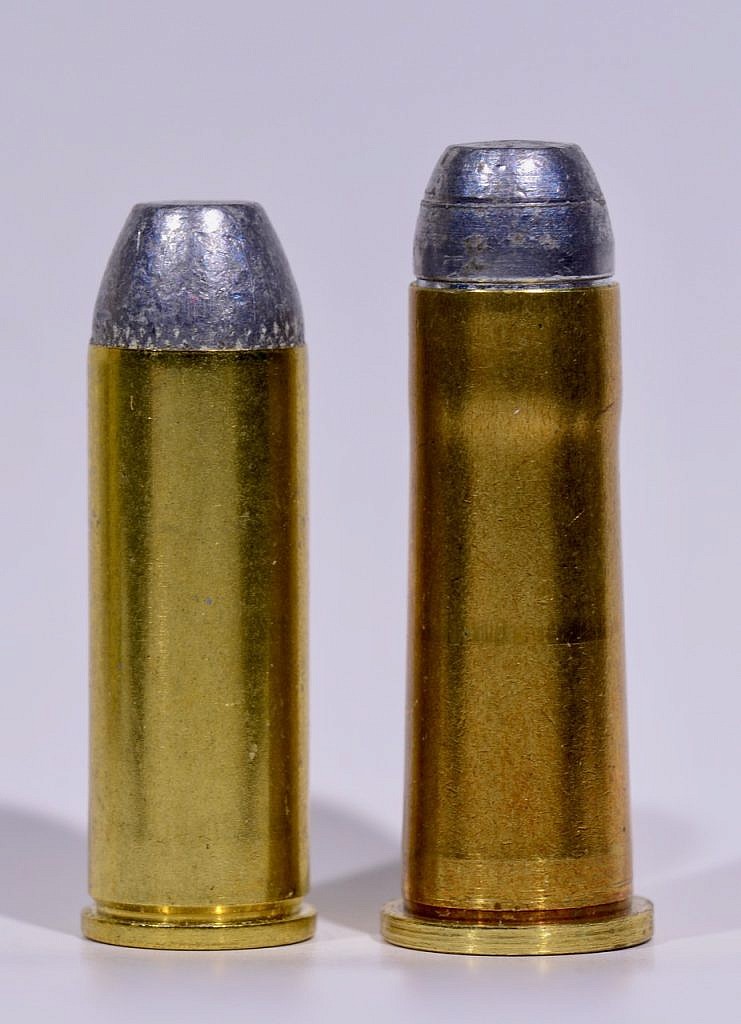
A large, six-chamber, revolver, originally designed for the Austro-Hungarian cavalry, it was chambered for a long, centerfire 11mm, (usually 11.2) cartridge that had previously been used in Früwirth carbines, and is now generally known as the 11.2 Montenegrin.
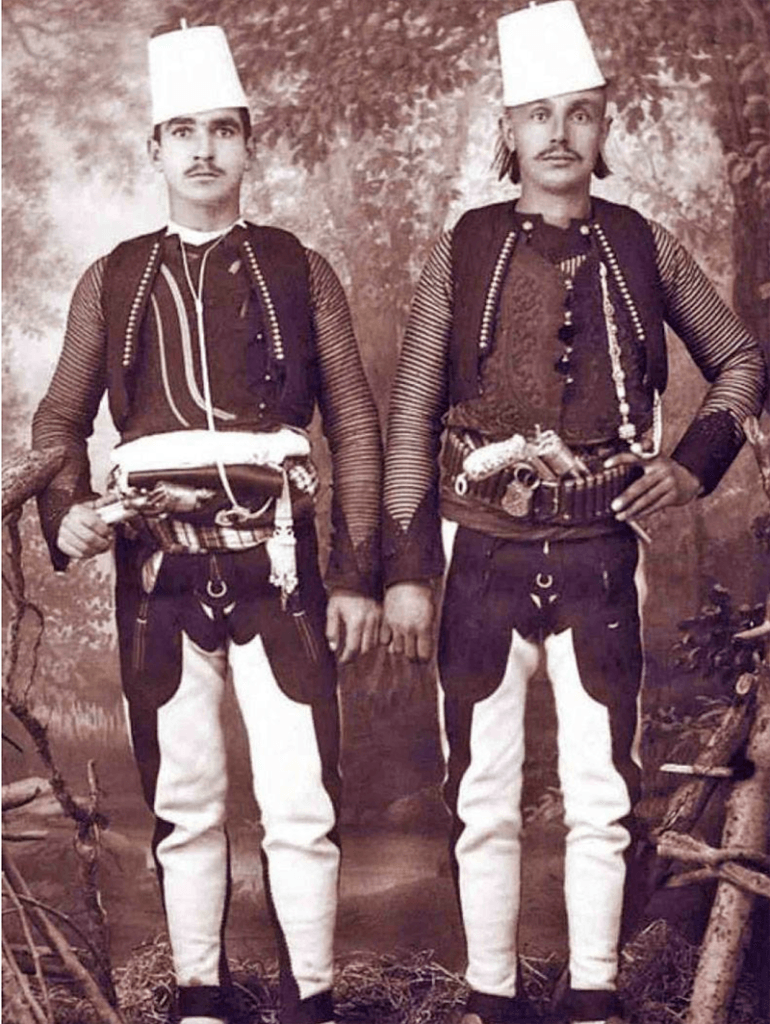
With a barrel length of 9.3 inches (375mm), and weighing up to 2.9 lb (1.3 kg), the single- or double-action Montenegrin revolver was described as “the longest, heaviest, and most powerful European revolver of that time.” One writer says it was the only European weapon as powerful as a Colt Peacemaker .45 Colt. Its 20-gram cartridge with 1.48 grams of powder can traverse three one-inch pine boards at 114 meters/375 feet. The huge-cylindered black-powder monster was worn stashed in the sash or belt, with no holster, along with a saber and often a rifle.
The open-frame revolver, as described in Pistols: An Illustrated History of Their Impact, “was fitted with a loading gate on the right side of the frame, and a rod ejector allowed the removal of spent cartridge casings… Disassembly was accomplished by removing a single large screw in the lower forward frame and barrel assembly. A long safety bar on the right side of the frame below the cylinder was one of the double-action Model 1870’s more distinctive features.” One writer compared their rounded handles to the grip of the 1896 “Broomhandle” Mauser.

A short pull of the hammer sets the safety, while actually pulling the trigger fires the gun. The frame of the improved 1870/74 model was steel rather than iron. When Gasser died in 1871, the enterprise went to his brother; hence the “Rast and Gasser” of later models, such as the Gasser M1898.
Unable to meet the demands of the Great War, Belgian and Spanish manufacturers started producing Gasser-pattern revolvers, and there are infinite unlicensed variations.
More expensive revolvers had elaborate bone or ivory grips, nickel plating embellished with engraving, or gold inlay. Ader Auction House actually had a stag-horn gripped M1870 with silver inlay, stamped “GASSER PATENT WIEN OTTAKRIG S. MARKE 12315” and engraved NI, for Nikola I.
All the really interesting technical stuff can be found by clicking here.
And on YouTube by C&Rsenal
or by Forgotten Weapons
Young Montenegrin males were encouraged by Austro-Hungarian authorities to emigrate to the United States and, between 1864 and 1914, some 17,000 arrived, many with their cherished revolvers. Thousands more M1870s were smuggled into Mexico during the Revolution, and ended up in the States.
Now that I think of it, maybe Montenegro infiltrated my brain while reading mystery novels: Rex Stout’s brilliant detective, Nero Wolfe, hailed from Montenegro.
Brooke Chilvers thanks www.voyageraumontenegro.com for making what was imagined real.