A&F discovered, probably in the late 1950s, that four Spanish gun makers offered intriguing doubles—lovely wood, excellent engraving, fine handling qualities—the whole package, and at very low prices. Except…except…when it came to heat treatment the Spaniards had no interest. It was steel, and it was strong enough. And so when you shot a round of skeet and your standing breech swelled and the action would not break until it cooled, you could admire the lovely wood. So A&F bought Spanish shotguns, pulled them apart, heat-treated them, put them back together, and had something really special to offer.
This leads us to one of my favorite A&F stories. In the 1960s, Griffin & Howe was run by one Leo Martin, of whom everyone was petrified. In mid-decade or so, Jack O’Connor, who was even more frightening than Leo Martin, gave G&H his own Spanish double for the Treatment, and when he next visited New York, the gun was ready, and so was a bill for $650, which was a chunk of money back then.
O’Connor put the gun together, broke and shut it a couple of times, took it apart, stowed it in its oak and leather case, snapped the case shut, and walked off the seventh floor and into immortality. There was no mention of payment. I think Leo Martin would have been more inclined to ask money from a forest cobra.
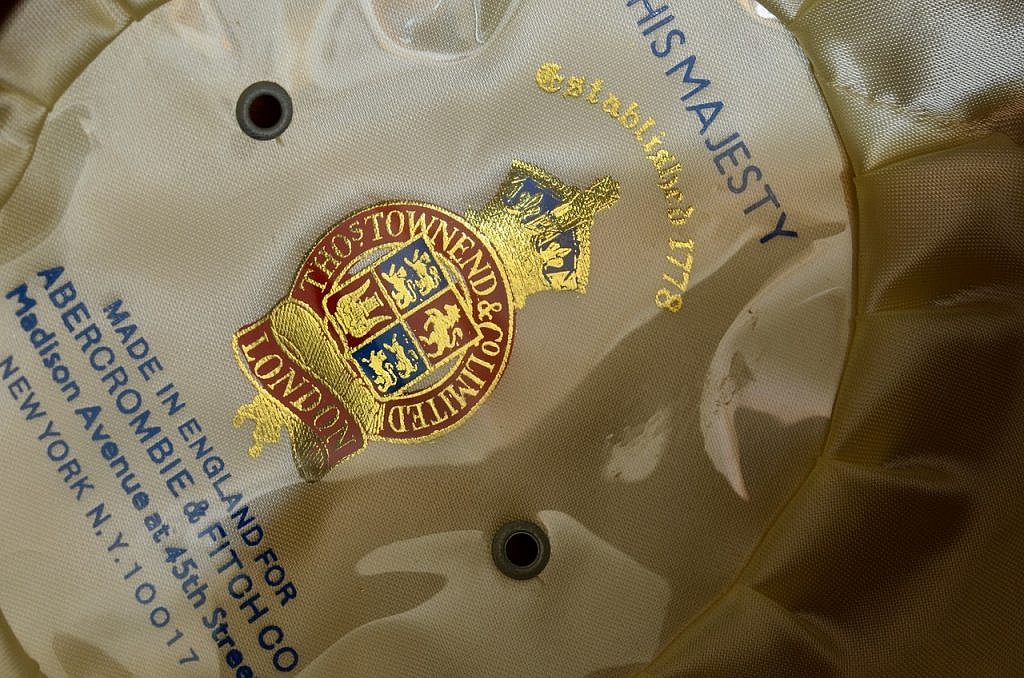
The staff of A&F was all at least in their 50s, most in their 60s, and some a good deal older. They were honest to God experts. Their customers were, in considerable part, people who had a great deal of money which they had not earned. Anyone who was not similarly situated was treated like dirt, and this included the sales people at A&F. They were polite, and took it, because it was a different era.
But if you were young, and in earnest, and wanted to learn, the A&F staff were the kindest people in the world, and would spend any amount of time explaining things and answering questions. John Merwin, my fishing colleague and a contemporary, had the exact experience on the eighth floor as I did on the seventh. He could recall, as a 14-year-old, taking the train from Connecticut to A&F, and buying a few dollars’ worth of flies, and the salesman explaining to him, with endless patience, why one fly would work and one would fail, and then taking the train home filled with hope and joy.
A&F had heart.
In 1974, John Realmuto, who was G&H’s manager, let me walk out of the store with a $2400 rifle they had built for me and finished early. I had not yet saved the money to pay for it, but John saw the anguish on my face and said, simply, “Take it.” I did, and they got paid. If he had been caught, he would have been fired on the spot.
In 1972, I was hired by Field & Stream, and went into A&F to tell Ned Meehan, a tall, stern old man who had sold me most of my guns over the years.
Ned digested the news, and said, “David, Field & Stream is a great magazine. While you’re there you do the very best work you can.”
It was that kind of place.
But the world changed and the people died, and A&F had a pervading sense of doom about it long before the end came. What they sold was the Best, but it was the Best of the pre-war years, the theory being that if it was good enough for Papa Hemingway, it was good enough for subsequent generations. Their attempts to modernize were ham-handed and out of touch.
In 1976, the company went into Chapter 11, and in November a year later, it was announced that the store was being cleared out and the building would be demolished.
And so they tore it down. A backhoe drove onto the ground floor and tore the walnut paneling into splinters. I was in Montana when the desecration took place. I’m glad I wasn’t there. Now there is some kind of soulless office building where A&F once stood.
But the few of us who were there and still survive, remember. We had a home, once.
Dave Petzal’s giant, vicious boxer (AKC) King of Monmouth was on the A&F mailing list from 1954 to 1969, due to their buying him a dog bed and having it sent by mail. “Who is this King living at this address?” asked the Post Office.