Facing the line of Guns where he himself was supposed to be on opening day, Colonel the Hon. George Hysteron-Proteron—nickname “the old Grouse-cock,” and now one for real—organizes his fellow grouse along military lines, plans his campaign, and they manage to defeat the keepers and even kill one of the Guns the colonel particularly dislikes, although many die in the process.
Conversely, as a contributor to The Field and Shooting Times, Stanford wrote Grouse Shooting, Volume 2 in the Shooting Times Library. He truly could see both sides.
Ernest Hemingway was a Stanford admirer. Reading his novel Guns Wanted when it was published in 1949, Hemingway pronounced it “marvelous.”
While I like his novels, my favorite of Stanford’s books is The Complex Gun. Lt. Col. Stanford enjoyed the odd day of formal driven shooting, and participated in the post-war “syndicate” system where a group of acquaintances leased the shooting on private land and organized their own drives. But he was primarily a “rough” shooter, following a dog through the tangles rather than manning a butt with the birds riding the wind in packs. Complex Gun examines various aspects of hunting, the different birds, and the different approaches, and is replete with tales you will find nowhere else.
Having read it a dozen times at least, that book, more than any other, makes me want to pick up a shotgun and step out the door into a cold, blustery wind.
Like Robert Ruark, there is no such thing as a bad J.K. Stanford title, and for years I picked up every one I came across. If they were duplicates, I gave them away and, one year, bought a dozen copies of The Twelfth to give as Christmas presents.
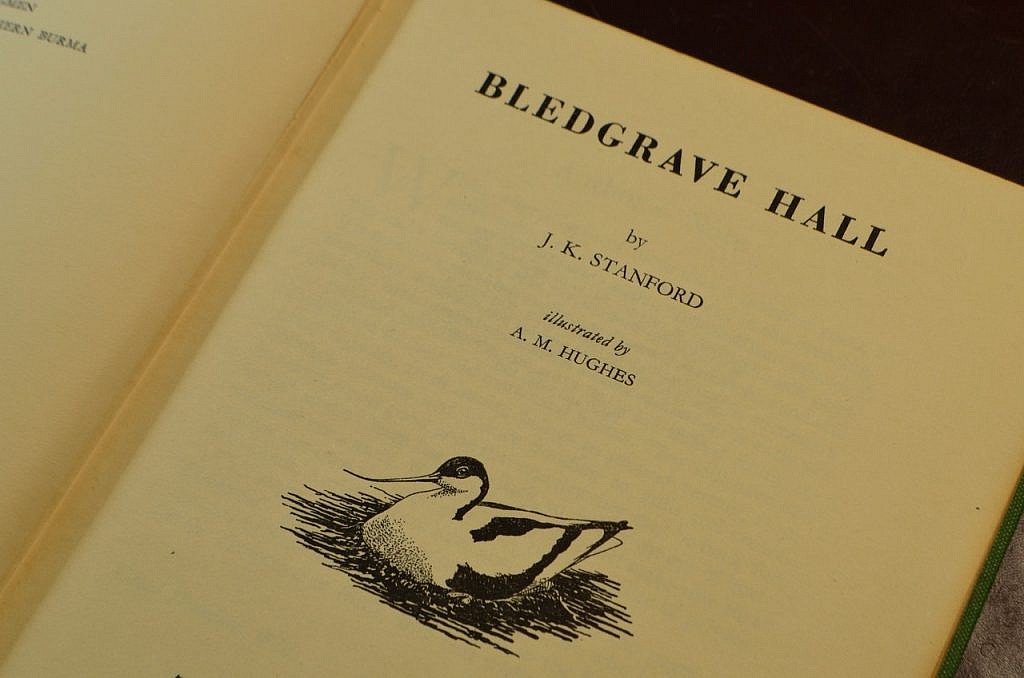
In June, in search of a copy of Olly (the biography of the Marquis of Ripon), Abe Books alerted me to the availability of Stanford’s novella, Bledgrave Hall, in a one-room bookshop in remotest Wales, available for less than the shipping cost, which itself was reduced if I bought both books. I expected them to arrive together, but no. Olly arrived right on time, while the other turned up 34 days (yes, I was counting) later, presumably having come on a tramp freighter by way of the Azores.
In its own way, Bledgrave Hall’s meandering arrival was endearingly old-fashioned, which seemed appropriate for yet another of J.K. Stanford’s books. I’m saving it for the first real rainy blustery day of fall. It looks like it’s seen a few.
Gray’s shooting editor, Terry Wieland, is an unrepentant bibliophile who prefers musty, foxed pages of ancient manuscripts to the brightest of iMac screens. But then, you probably knew that.